Why we blend with Reishi
15 July 2026 · 6 min read
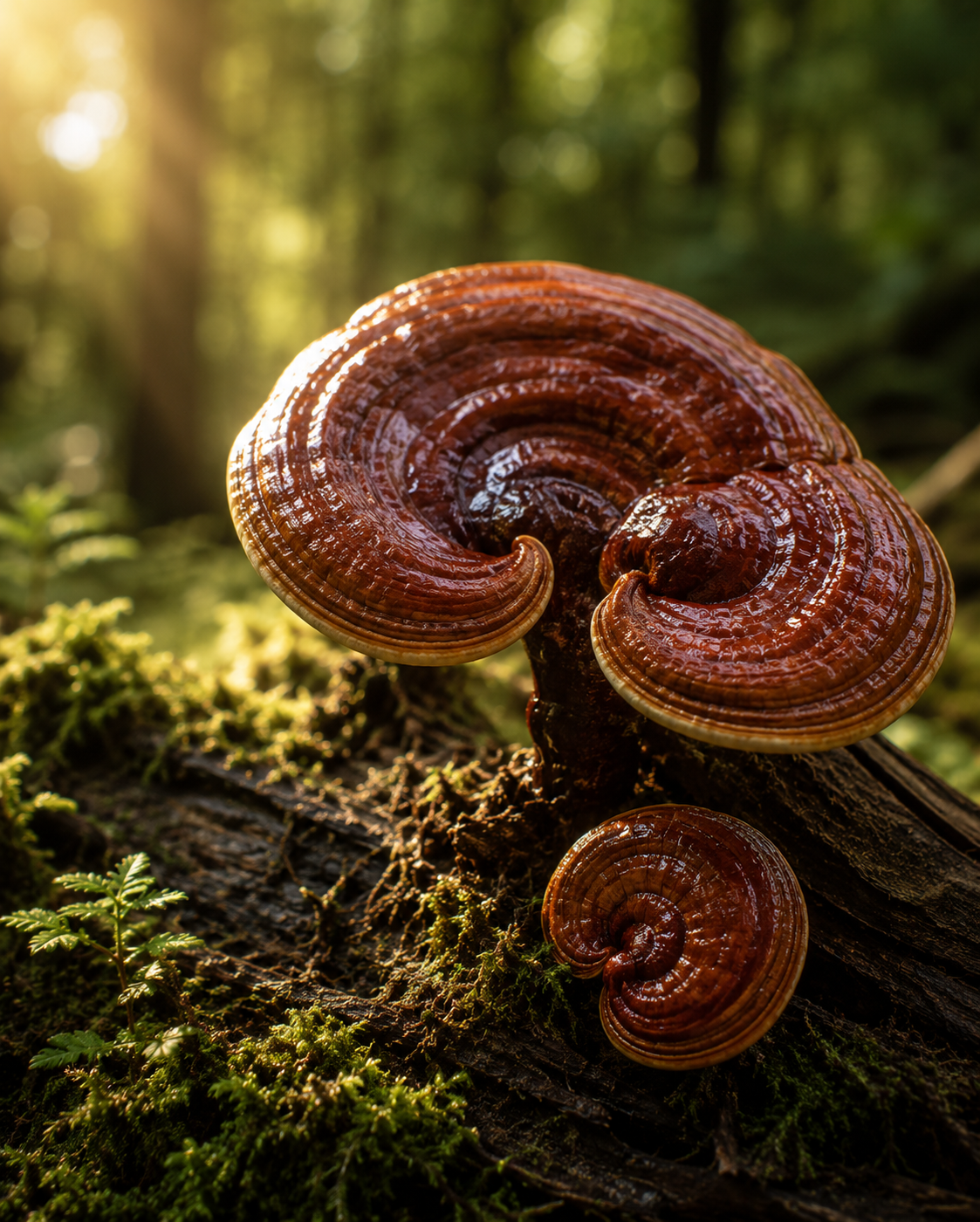
The quiet mushroom of long life — for calm that isn't sedation.
Reishi is unlike almost any other mushroom in the herbal tradition. It is not eaten. It is not soft, or edible, or agreeable in the way a Shiitake or an Oyster mushroom is. It is woody, lacquered, and profoundly bitter — a signature of the very compounds that have made it so revered for so long.
The Chinese called it Lingzhi — 'the spirit plant'. Classical Chinese texts, some more than two thousand years old, refer to it as the 'mushroom of immortality'. In Japan it is Reishi. In both traditions it sits at the very top of the herbal hierarchy — the tonic of the settled heart, the quiet spirit, and the long life lived without extremity.
Calm, not sedation
A common misunderstanding: Reishi is not a sleeping herb. It does not sedate. What it is traditionally associated with is a calming of the surface agitation of the day — the buzz that makes it hard to think, and hard to rest. It clears the noise. The clarity that follows may make sleep easier, but sleep is not its mechanism.
In traditional practice, Reishi was described as the herb of Shen — the settled spirit. It was the tonic reserved for the person who had done enough, been enough, and was ready to sit still.
The bitterness is the medicine
Reishi is bitter. This is not a flaw — it is a marker of the triterpenes that give the mushroom much of its character. A Reishi extract that isn't bitter has usually been diluted, or is made from mycelium rather than the fruiting body. Grann Rising blends taste of Reishi, quietly, underneath the cacao and warmth of the recipe.
Why it appears in every blend
Reishi is our thread of quiet. In RISE, it steadies the more uplifting botanicals. In LIFT, it balances the drive of Cordyceps and Mucuna so the blend doesn't tip into stimulation. In PURE, it is the deep note underneath the immune-supportive mushrooms — the reason PURE feels grounding rather than merely active.
How we take it
- Calming and balancing — not a sleep herb, though it may make rest easier.
- Dual-extracted so both water- and alcohol-soluble compounds are present.
- Traditionally taken as a long-term tonic, over months and years.
- Naturally bitter — a sign of the compounds at work.