Why we blend with Mucuna
21 July 2026 · 5 min read
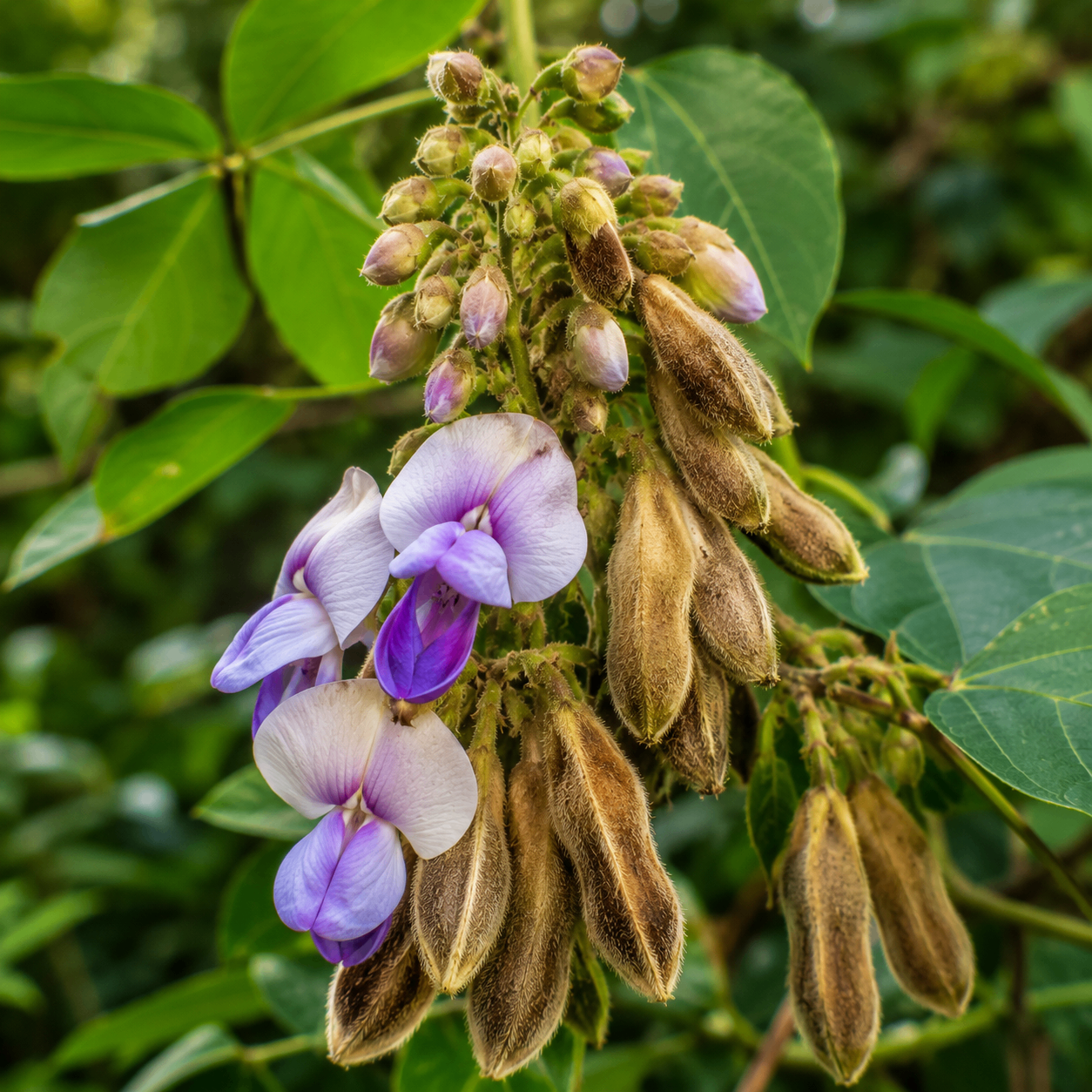
A tropical velvet-bean and the natural source of L-Dopa — for mood and motivation on demanding days.
Mucuna pruriens — the velvet bean — is a climbing legume grown across the tropics, from India through West Africa to the Caribbean. Its long, hairy pods contain small beans that are the richest known natural source of L-Dopa: the direct precursor the human body uses to make dopamine.
That single fact is what has made Mucuna such an interesting botanical to work with. It doesn't act on dopamine indirectly, through some downstream pathway. It provides the raw material the body was already going to use.
A rasayana of Ayurveda
In classical Ayurveda, Mucuna is a rasayana — a rejuvenating tonic, traditionally used to steady the mind, support vitality, and carry a person through periods of change or strain. It was one of the specific botanicals recommended in the ancient texts for those who felt their motivation and spirit had thinned out.
The traditional preparation was gentle: powdered beans, taken with warm milk or ghee, over long stretches rather than short courses.
Why it appears in RISE and LIFT
Mucuna is a mood botanical, not a stimulant. It doesn't push the nervous system. What it does support is the underlying sense of motivation and drive that carries a person into their day and through their movement.
In RISE it sits beside Schisandra and Albizia for a mornings-that-feel-open quality. In LIFT it sits beside Cordyceps and Lion's Mane for the days that ask more of the body and mind together.
How we take it
- Traditionally taken with warm milk or ghee in Ayurveda.
- Supports mood and motivation without stimulating the nervous system.
- Best taken consistently over weeks rather than as a one-off.
- Sits alongside Cordyceps and Lion's Mane in LIFT.