Why we blend with Maitake
18 July 2026 · 4 min read
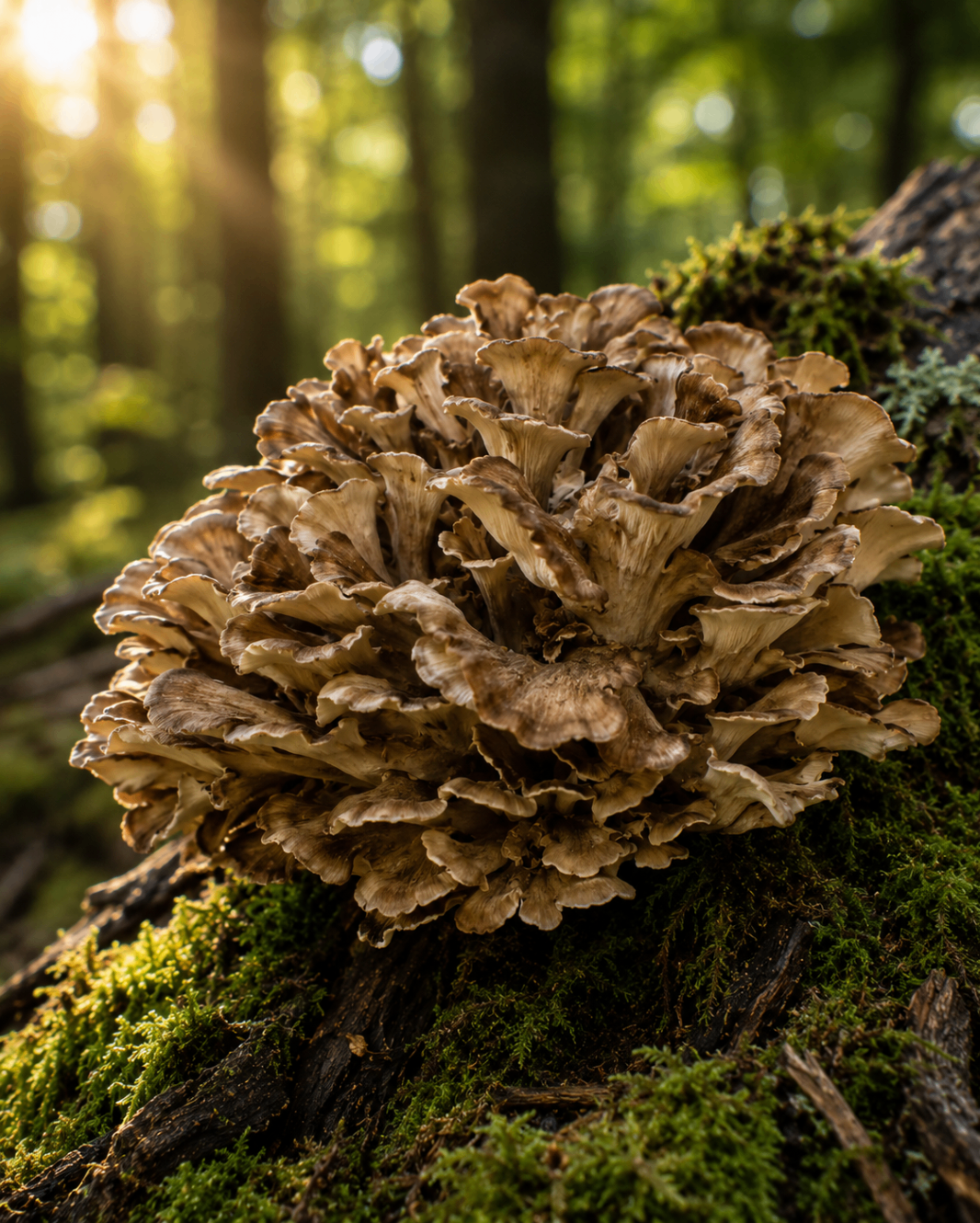
The 'dancing mushroom' of Japan — a culinary favourite with a quiet immune history.
Maitake grows in soft, clustered rosettes at the base of old oaks, sometimes reaching the size of a small child. Its Japanese name — 舞茸 — means 'dancing mushroom'. The traditional explanation is that foragers who found one were said to dance for joy. A less romantic version has them dancing simply because the mushroom was so valuable it was once traded for its weight in silver.
A culinary mushroom first
Maitake is, above all, a food. It is soft, savoury, and one of the most prized culinary mushrooms in Japan and increasingly in the West. That its extracts are also immune-supportive is a happy convergence: it is one of the few functional mushrooms that could reasonably be a regular part of dinner as well as of a daily ritual.
The immune tradition
In East Asian traditional practice Maitake has long been used to support immune balance across the seasons. Its specific fraction — sometimes called the D-fraction in modern research — has been the subject of decades of study for immune modulation.
Why it sits in PURE
PURE is layered — several immune-supportive mushrooms working together rather than any single one carrying the load. Maitake sits alongside Chaga and Reishi in that layering. It brings a gentler, more culinary note — a mushroom the body already recognises as food.
How we take it
- Traditionally used as both food and tonic in Japanese cooking.
- Contributes to the layered immune profile of PURE.
- Pairs naturally with Reishi and Chaga.
- Safe as a daily long-term tonic.